Pedagogical Approach
Questioning-Based Thinking
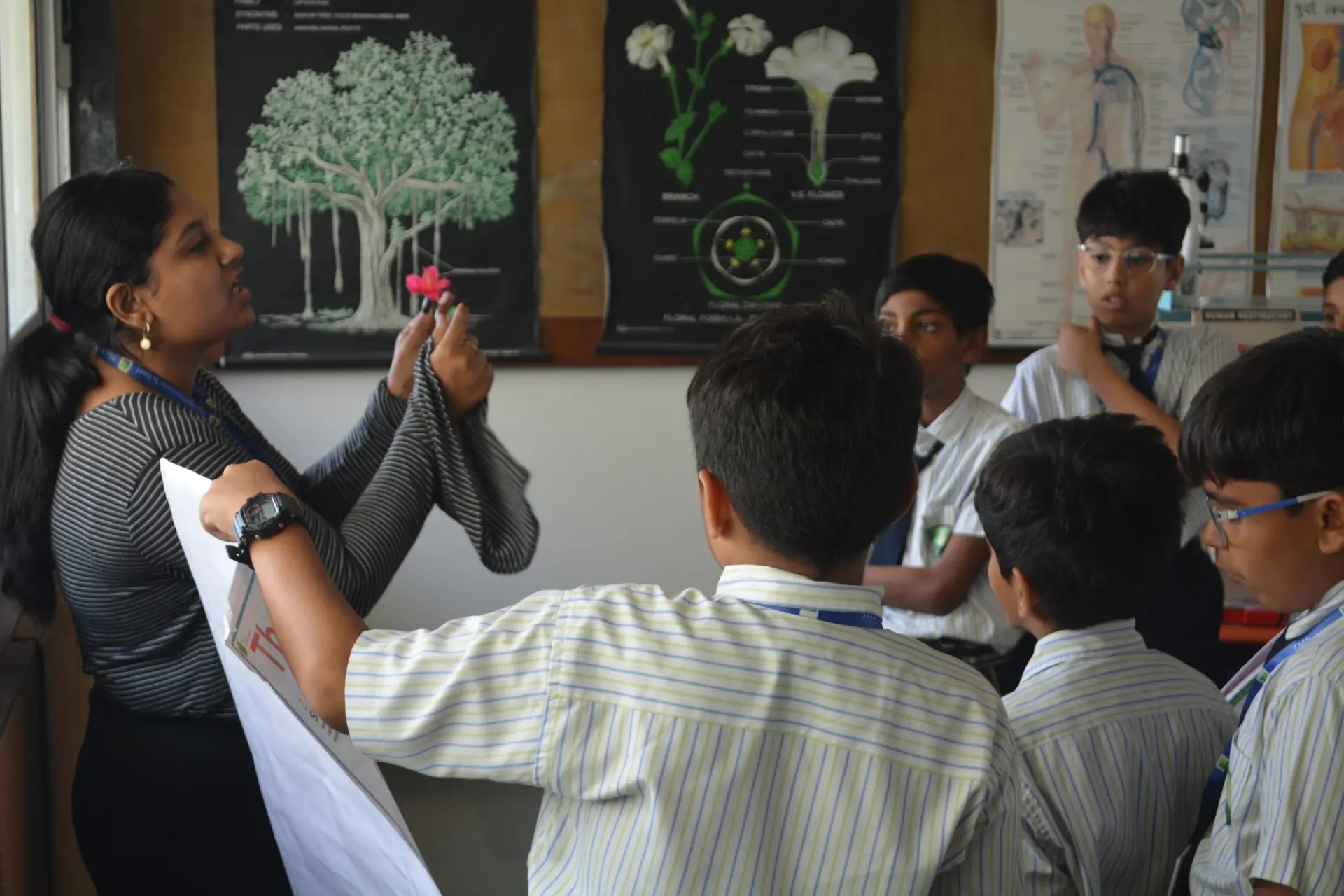
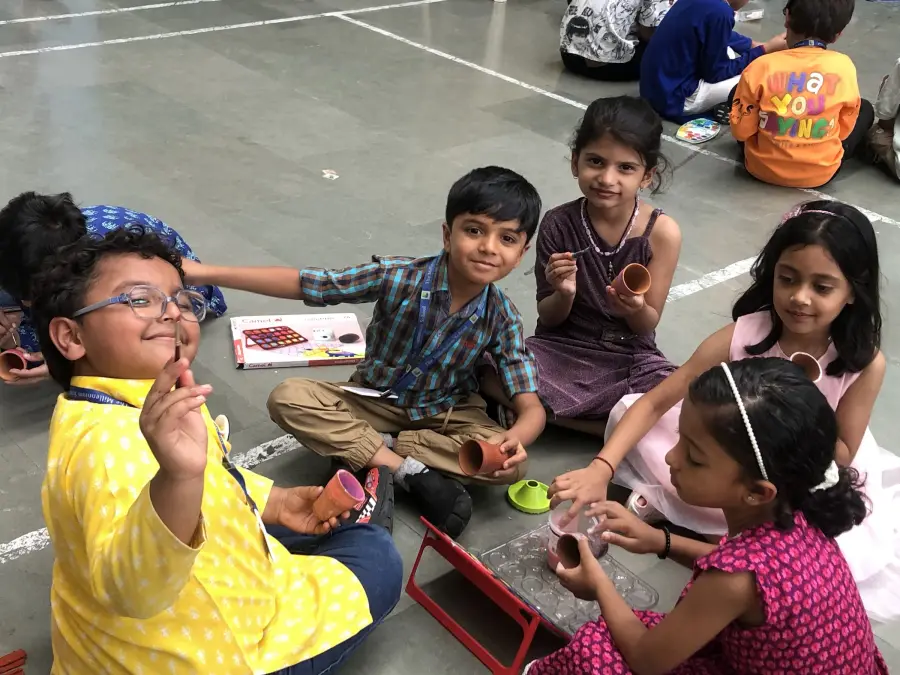
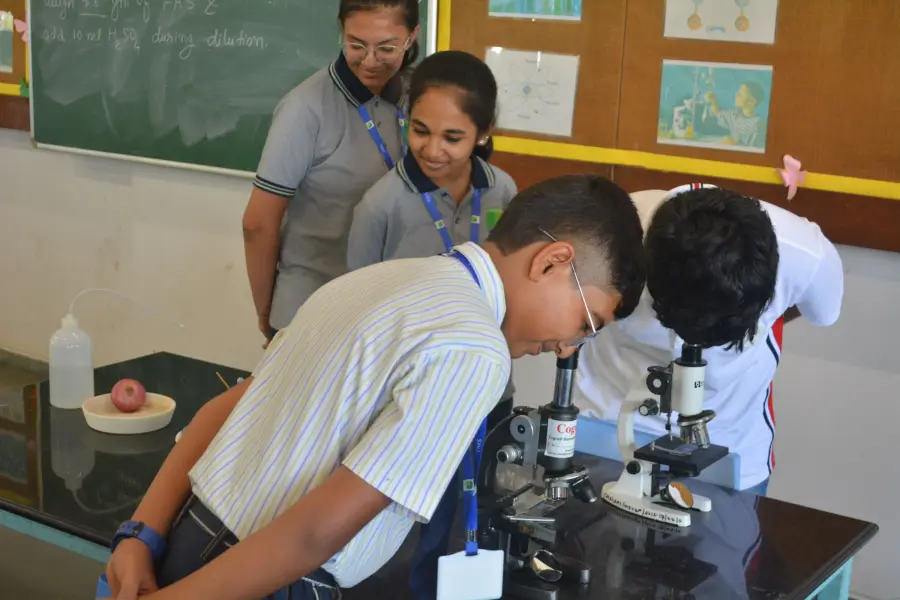
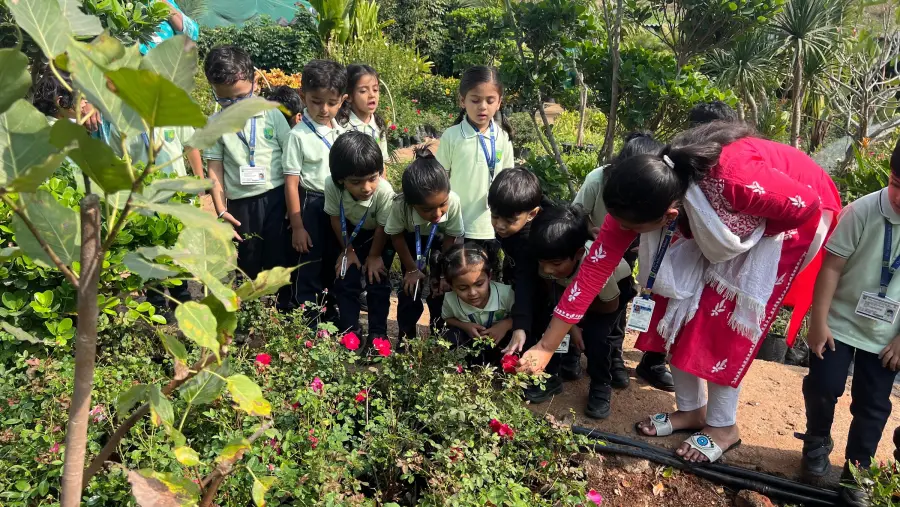
Students are encouraged to think in four powerful ways. Together, these strategies create a dynamic, engaging, and reflective learning environment that helps children become thoughtful, curious, and compassionate individuals.
- 01
Look Beyond
Imagine creatively (e.g., If plants went to a salon, what would they do?)
- 02
Look Deep
Analyze deeply (e.g., Why are leaves green?)
- 03
Look Around
Think socially (e.g., What happens if trees are cut?)
- 04
Look Within
Reflect personally (e.g., Should I water a wilting plant?)
01 Explore
Look Beyond
This facet encourages learners to go beyond the immediate lesson and explore the wider world, possibilities, and implications of what they have learned.
- It develops curiosity, imagination, and the ability to connect learning with the world beyond the classroom.
- Students ask: “What else can I learn about this?” or “Where can this learning take me?”
Example
While learning about water conservation, students go beyond the textbook to investigate how different countries conserve water and explore innovative methods such as rainwater harvesting and wastewater recycling.
02 Understand
Look Deep
This facet encourages students to examine a concept closely, understand the reasons behind it, and develop deeper conceptual understanding.
- It focuses on questioning, reasoning, analysis, and finding the “why” behind a fact.
- Students ask: “Why does this happen?” or “What is the reason behind it?”
Example
Instead of simply learning that the Constitution provides Fundamental Rights, students explore why these rights were considered necessary and how they protect citizens in real-life situations.
Key question
“Why are Fundamental Rights important in a democracy, and what could happen if these rights were not protected?”
03 Connect
Look Around
This facet helps learners observe their surroundings and make connections between classroom learning and their immediate environment.
- It develops observation, awareness, application, and the ability to recognise learning in everyday life.
- Students ask: “Where do I see this around me?” or “How does this affect my surroundings?”
Example
While learning about shapes in Mathematics, students observe their school surroundings and identify circles, rectangles, triangles, and other geometric shapes in windows, clocks, doors, signboards, and buildings.
04 Reflect
Look Within
This facet encourages students to reflect on themselves—their thoughts, feelings, values, choices, strengths, and areas for growth.
- It develops self-awareness, empathy, values, and reflective thinking.
- Students ask: “What did I learn about myself?” or “How can I use this learning to become a better person?”
Example
After learning about kindness and empathy, students reflect on a situation where they helped someone or could have responded more kindly. They identify what they felt, how their actions affected others, and what they would do differently in the future.
In a nutshell
| Facet | Focus | Key question | Example |
|---|
| Look Beyond | Explore possibilities beyond the lesson | “What more can I discover?” | Researching water conservation practices around the world |
|---|
| Look Deep | Understand concepts deeply | “Why does this happen?” | Analysing the multiple causes of the Revolt of 1857 |
|---|
| Look Around | Connect learning to surroundings | “Where do I see this?” | Finding geometric shapes around the school |
|---|
| Look Within | Reflect on self and values | “What does this mean to me?” | Reflecting on one’s response to a situation involving kindness |
|---|
Together, the four facets create a holistic learning journey: Look Beyond → explore, Look Deep → understand, Look Around → connect, and Look Within → reflect.